
Financial Prepping: How to Get Your Money Ready for a Cyberattack, Bank Failure, War or Blackout

Written by
Sharene Lee
Financial prepping means matching your money to three jobs: Now, Move and Keep. See which cash, gold and crypto work in a cyberattack, bank failure or blackout.
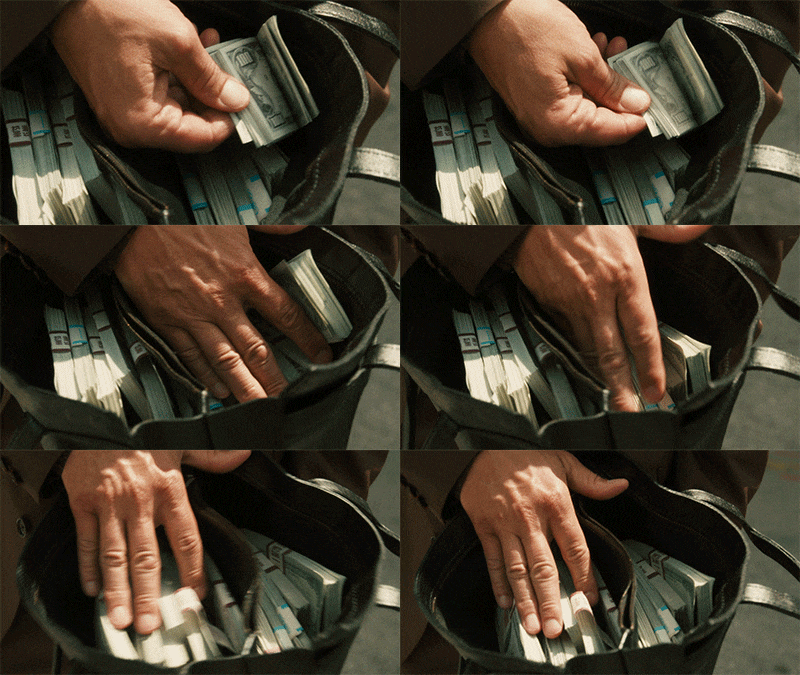
Financial prepping means matching your money to the job it has to do when normal systems fail. Keep some for the next few days that works with the network down (Now). Keep some you can carry or reach from anywhere, and prove is yours (Move). Keep some stored where you can get it back, and not in a bank (Keep). One question runs under all three, and I call it Reach: can you get in with the network down?
Key takeaways
- Governments are asking households to plan for about three days without power, water or card payments. The Pentagon is planning for 90 days at its own bases. Almost all of that advice is about food and water, and almost none is about money.
- In eight days, from 29 October to 6 November 2026, an exchange was robbed, a bank was taken over, a bank was hacked and a payments system went down. Each was one shared system failing with everyone connected to it.
- Cash, gold and silver, and crypto each fail in their own way. None is the best. Match each type of money to a job: Now, Move or Keep.
- A bank is a poor place to store money in a crisis, because a balance is a claim on a system you can't see.
- Reach is the part people forget: codes sent by text need a network, and your own keys need a recovery plan.
Why are governments telling people to prepare?
Governments in the UK, the EU, Canada, Sweden, Finland and Norway are asking households to prepare for days without power and other services. The UK's Be Ready campaign launched on 22 October 2026 and plans for about three days; its checklist includes some cash in case card payments and ATMs fail. The EU's Preparedness Union Strategy (March 2025), Canada and Finland use 72 hours. Sweden and Norway ask households to cope for about a week. The reasons they give range from severe weather to cyberattacks and war. The Pentagon is separately planning for its own bases to run 90 days alone.
The UK campaign is the first stage of a three-year effort covering severe weather and other emergencies, not one named threat. The Pentagon's FORTRESS initiative was announced by Defense Secretary Pete Hegseth in his 30 September 2026 State of the Force address, with every major base meant to generate its own power. Fox News Digital reported on 25 October, citing internal planning documents, that the Pentagon is developing a requirement for bases to sustain essential operations for at least 90 days. A senior defense official said on 20 October that about 500 continental US bases were being assessed and that full implementation could take decades. So the 90 days is a planning target for the military, not a statement about what is coming for you.
I'm an immigrant, and have been for more than half my life. I moved from Singapore to the US, then to the UAE, and now to Riyadh, where I'd like to grow old. A war began in this region this February. My TikTok feed has been full of prepper videos, all of them about food, water and generators. None about money. With the news the way it is, the anxiety is real. What calms me is having a plan.
What failed in the last eight days?
Between 29 October and 6 November 2026, thieves took about $6.3 billion from Binance, supermarket refrigeration was hacked across Europe, Paraguay took over a bank with about 3 million customers, a French bank confirmed a cyberattack, and 128 Japanese credit unions lost their ATMs for hours. Four of the five were financial, and each was one shared system failing with everyone connected to it.
On 29 October, thieves took about $6.3 billion from Binance, most of it in about 20 minutes, according to TRM Labs; Binance says it is covering its customers. On 2 November, a second wave of attacks hit supermarket fridges and freezers in at least six European countries, after an earlier wave in French supermarkets in October; UK cyber officials said the French units were connected directly to the internet with default passwords. On 3 November, Paraguay's central bank took control of Ueno, a bank that says it has about 3 million customers. On 4 November, the French cooperative bank Crédit Mutuel Arkéa confirmed a cyberattack; about €100 million was reported missing, with estimates up to €118 million, and the bank says customer assets weren't affected.
On Friday 6 November, ATMs and counters stopped at 128 Japanese credit unions, called shinkin banks, from about 1:30 in the afternoon. The operators said it was an equipment malfunction, not a cyberattack. Customers couldn't deposit or withdraw at counters or ATMs, and some services were restored later that day, according to Jiji Press via nippon.com.
Your balance only works while the power, the network and your bank's computer system all work at the same time. That is how a balance is built: it is a claim on records you can't see, and you can use it only while those records can be reached.
What counts as liquid money, and which type is best?
Liquid money is money you can spend or sell easily. It is not your house, your car or your business. Three types fit: cash, which is best for daily spending offline; gold and silver, a store of value that also works offline; and crypto, which moves globally but mostly needs the internet. None is the best, because each fails in its own way.
Cash loses value to inflation, is damaged by water and fire, and is hard to carry across borders in size. Gold and silver hold much value in little space, but are hard to spend until sold, and governments have seized gold before: in 1933 a US executive order required holders to hand in most of their gold coin, bullion and certificates to the Federal Reserve. Crypto moves anywhere in any size, but it usually needs the internet, phishing is real, and the risk is yours. So the question is not which type is best. It is which type does which job.
Job 1: Now. What money works with no network?
The first job is daily needs for the next few days: food, water, energy. That money has to work with the network down. It means cash in small notes and a paper ledger to track it, because proper accounting is how you notice what you spend. It also means small gold or silver coins for everyday spending; silver is easier to spend in small amounts. Keep it in a hidden fire-proof safe.
How much is your own number. Governments plan for three days, and the UK's checklist says "some cash". You decide how many days of costs you want in hand, and I won't give you a figure. Check the rules where you live on how much you can hold and carry.
Job 2: Move. What money can leave with you?
The second job is money that can leave with you, whether you leave the country or only travel. Think of three things: bank cards, preferably from different countries; a crypto card or a wallet you hold the keys to, funded in advance; and papers that prove something is yours.
Some bank cards don't work when you are in a different country, which is why I'd hold more than one, from different countries. For global spending, I find crypto cards the best option. The catch is that a card company is still a company, so fund the card before you need it and test it where you will use it. A wallet you hold the keys to has no bank in the middle, but moving money from it usually needs the internet. And papers that prove something is yours, such as ID, receipts and title deeds, matter at borders and with banks. Keep copies you can open with no network. Any of these can be blocked or need a signal, so test each one before you need it.
Job 3: Keep. What do you store, and how do you get it back?
The third job is the money you store and can get back. Keep it in physical gold in a fire-proof safe, and know in advance who would buy it quickly. Keep crypto in a cold wallet that you control, with the recovery phrase kept apart from it. And do not keep it in a bank. A bank balance is a claim on a system, and most of what failed in the last eight days was financial.
Two tips. First, plan so that someone else can get in if you can't. This is the part of the course lesson on who can spend your crypto, and it comes down to recovery: with your own keys, only whoever holds the recovery details can get the money back, and a bank at least has a process for a family when someone dies, which varies by country. I've made it possible for someone else to get mine back if they have to. Second, never connect your wallet to random apps, and if in doubt, make a new wallet. Never give your recovery details to anyone who contacts you first, because impersonating support is a known scam.
Reach: how do you get in, and what about what you can't move?
Reach is my word for the question under all three jobs: can you get in with the network down? Think of the code your bank texts you when you log in. With no network, the code doesn't arrive. Account details that live only in an app, documents that live only in an email, and a recovery plan that lives only in your head all fail the same way: if you can't reach it, you don't have it.
Some of what you own can't move. For stocks, update your contact details so you can recover the account without your phone number. For gold funds, remember the custodian holds the gold: check where it sits, and if it is in a country in crisis, consider holding it elsewhere. For property, keep paper and digital copies of your title deeds.
How do you start?
Pick one type of money for each job: one for Now, one for Move, one for Keep. Then try it: turn off Wi-Fi and mobile data for an afternoon and see what you can pay with, what you can prove, and what you can reach. It costs nothing, and the gaps show up fast. The point is not to expect the worst. It is to have somewhere to put the worry.
So here is the question I'd leave you with: is your money ready for a cyberattack, bank failure, war, or blackout?
If you want to understand how your own keys and recovery work before you build the Keep job, that is what the Future of Finance course at academy.thelifedao.io teaches.
How money works, and how you can keep it riba-free.
FAQ
What is financial prepping? Financial prepping means matching your money to the job it must do when normal systems fail: Now (works with the network down), Move (carry it or reach it from anywhere, and prove it is yours) and Keep (stored where you can get it back, and not in a bank). It is planning, not predicting.
How much cash should I keep at home? There is no number I can give you, because it depends on your costs and where you live. The UK's Be Ready checklist says "some cash" in case cards and ATMs fail. Decide how many days of costs you want in hand, keep it in small notes, and check the rules where you live.
Is a bank a good place to store money in a crisis? A bank balance is a claim on a system you can't see, and it can be used only while that system works. In the eight days to 6 November 2026, a bank was taken over, a bank was hacked and a payments system failed for hours. That is why I keep the stored part of my money elsewhere, in forms I can recover.
Are gold and silver a good way to prepare? For the Now job, small gold or silver coins are a form of money that needs no network or code, and small sizes are easier to spend than bars. Governments have seized gold before, prices move, and I have no view on price. Treat them as one tool for one job, not as a plan.
What if I have to leave the country with my money? Money for leaving needs three things: bank cards, preferably from different countries; a crypto card or a wallet you hold the keys to, funded in advance; and papers that prove something is yours, kept as copies you can open offline. Test each one, and check the rules on carrying cash or metal across borders.
Subscribe to our newsletter
Join our newsletter and never miss an update!
Also to read

© 2026 The Lifedao. All rights reserved.